Introduction
Hemp (Cannabis sativa L.) is one of the most versatile plants on Earth. It has been cultivated for thousands of years for its fiber, seeds, and therapeutic compounds — yet it remains widely misunderstood due to its botanical relationship with marijuana.
This guide covers everything you need to know about hemp: what it is, where it comes from, how it works in the body, and why it has become one of the fastest-growing wellness categories in the world.
What is Hemp, Exactly?
Hemp is a variety of the Cannabis sativa plant species. The key characteristic that legally and practically distinguishes hemp from marijuana is its THC content.
- Hemp contains 0.3% THC or less (dry weight)
- Marijuana typically contains 5–30% THC
THC (tetrahydrocannabinol) is the psychoactive compound responsible for the "high" associated with cannabis. Because hemp contains only trace amounts, it produces no intoxicating effect whatsoever.
Hemp is rich in CBD (cannabidiol), CBG, terpenes, and other beneficial plant compounds — collectively known as the hemp extract or "full spectrum."
A Brief History of Hemp
Hemp is one of humanity's oldest cultivated crops, with evidence of use dating back 10,000+ years.
| Period | Use |
|---|---|
| ~8000 BCE | Hemp pottery and cord discovered in China and Taiwan |
| Ancient Egypt | Hemp seeds used as food; fibers used in textiles |
| 1600s–1800s | Major crop in colonial America (ropes, sails, paper) |
| 1937 | Marihuana Tax Act effectively criminalizes all cannabis in the US |
| 1970 | Classified as a Schedule I substance under the Controlled Substances Act |
| 2018 | US Farm Bill legalizes hemp federally (THC ≤ 0.3%) |
| 2020s | Global hemp market booms, driven by CBD wellness demand |
The Hemp Plant: Anatomy
Understanding the plant helps you understand the products.
Flowers (Buds)
The flowers are where most of the CBD, terpenes, and other cannabinoids are concentrated. Hemp extracts (oils, tinctures) are primarily derived from the flowers and leaves.
Seeds
Cold-pressed hemp seeds produce hemp seed oil, rich in omega-3 and omega-6 fatty acids. Note: hemp seed oil contains little to no CBD — it is a nutritional product, not a therapeutic extract.
Stalks & Fiber
Hemp stalks contain long, strong fibers used in textiles, rope, paper, and even construction materials (hempcrete).
Roots
Less commonly used, but hemp roots have been studied for anti-inflammatory and liver-protective properties.
Hemp vs Marijuana: Side-by-Side
| Feature | Hemp | Marijuana |
|---|---|---|
| THC content | ≤ 0.3% | 5–30%+ |
| Psychoactive? | No | Yes |
| Primary compounds | CBD, CBG, terpenes | THC, CBD |
| Legal status (US) | Federally legal | Federally illegal (Schedule I) |
| Primary uses | Wellness, food, textiles | Recreational, medicinal |
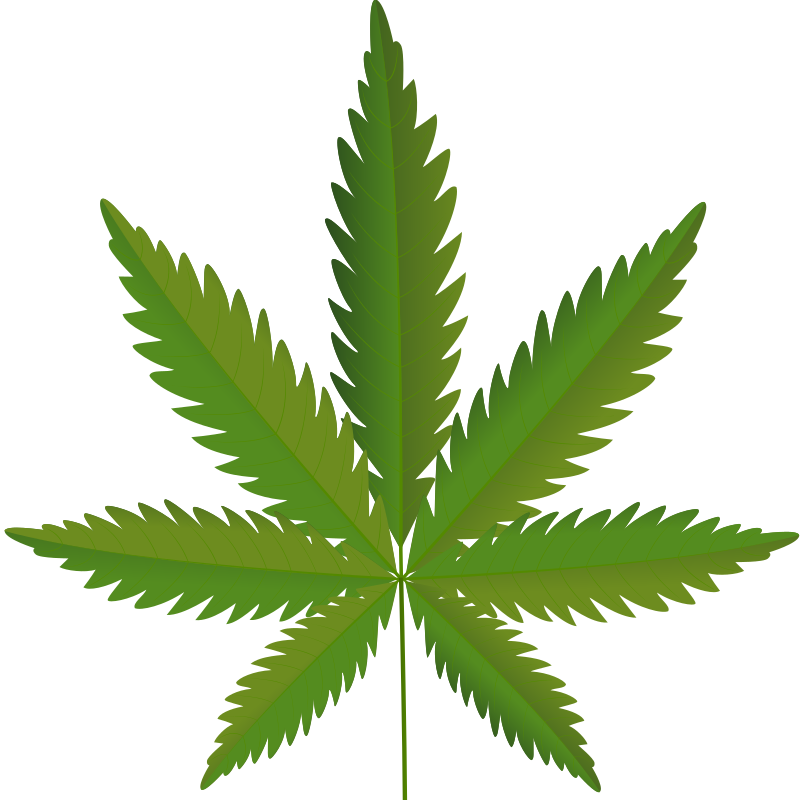
| Appearance | Tall, thin leaves | Shorter, broader leaves |
How Hemp Interacts with Your Body
Hemp's therapeutic effects are largely attributed to how its compounds interact with the endocannabinoid system (ECS) — a complex cell-signaling system found in all mammals.
The ECS plays a role in regulating:
- Mood and anxiety
- Sleep and circadian rhythm
- Inflammation and immune response
- Pain perception
- Appetite and metabolism
CBD and other hemp cannabinoids modulate ECS receptors (CB1, CB2) without binding to them directly the way THC does — which is why they produce therapeutic effects without intoxication.
Common Hemp Products
| Product Type | What It Is | Best For |
|---|---|---|
| Full-spectrum oil | Whole-plant extract with all cannabinoids + THC ≤ 0.3% | Maximum "entourage effect" |
| Broad-spectrum oil | All cannabinoids, THC removed | THC-sensitive users |
| CBD isolate | Pure CBD, no other compounds | Precise dosing |
| Gummies / edibles | Infused with hemp extract | Convenient, long-lasting |
| Topicals | Creams, balms applied to skin | Localized pain, skincare |
| Hemp seed oil | Pressed from seeds, nutritional | Omega fatty acids, cooking |
| Capsules | Pre-dosed hemp extract pills | Consistency, no taste |
Is Hemp Safe?
For most adults, hemp-derived CBD products are considered well-tolerated and safe. The World Health Organization (WHO) published a report in 2018 concluding that CBD is generally safe with a good tolerability profile.
However:
- Always consult your doctor if you are on medications (CBD can affect drug metabolism)
- Quality varies enormously — always look for third-party lab testing (COA)
- Pregnant or breastfeeding individuals should avoid hemp products
Key Takeaways
- Hemp is a Cannabis sativa plant with ≤ 0.3% THC — no psychoactive effect
- It's rich in CBD, CBG, and other beneficial plant compounds
- Hemp interacts with your endocannabinoid system (ECS) to support wellness
- It has been used by humans for over 10,000 years
- In the US, hemp was federally legalized in 2018 under the Farm Bill
- Quality matters — always verify products with a Certificate of Analysis (COA)